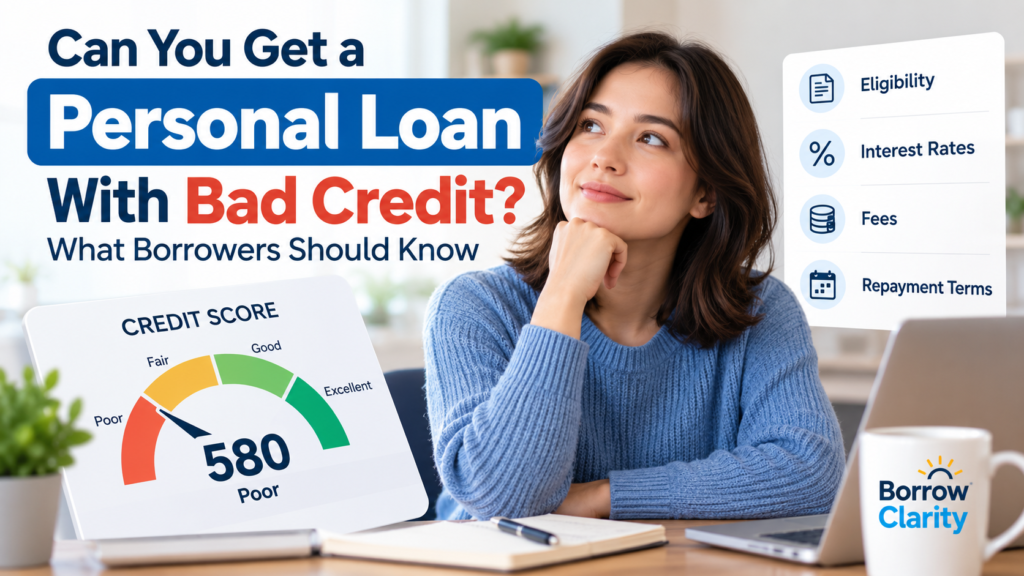
Getting a personal loan with bad credit may be possible, but a lower credit score can affect your eligibility, interest rate, fees, loan amount, and repayment terms. Approval is never guaranteed, and different lenders may evaluate borrowers differently.
Before applying, it helps to understand how your credit profile may affect a personal loan, what other factors lenders may review, and how to compare borrowing options carefully.
Can You Get a Personal Loan With Bad Credit?
It may be possible to get a personal loan with bad credit, depending on the lender and your overall financial situation. There is no single credit score that guarantees approval or rejection across all lenders.
Lenders may consider your credit history along with other information such as your income, existing debts, employment or income stability, and ability to make the required monthly payments.
If you are unsure what lenders commonly review, see our guide to personal loan requirements.
Remember that qualifying for a loan is only part of the decision. A loan that is available to you may still be expensive, so review the APR, fees, repayment period, monthly payment, and total borrowing cost before accepting an offer.
How Can Bad Credit Affect a Personal Loan?
Your credit profile can influence both whether a lender is willing to lend to you and the terms you may receive. The exact impact varies by lender.
1. Approval may be more difficult
A history of missed payments, accounts in collection, high balances, or other negative credit information may make some lenders less willing to approve an application.
That does not mean every lender will make the same decision. Lending criteria can differ, which is one reason borrowers should avoid assuming that one approval or denial represents the entire market.
2. Your APR may be higher
Borrowers viewed as presenting greater credit risk may be offered higher interest rates or APRs. A higher APR can increase both the monthly cost and the total amount repaid over the life of the loan.
Learn more about how APR works in our Personal Loan APR Explained guide.
3. The amount available may be different
The loan amount a lender is willing to offer can depend on multiple factors, including creditworthiness, income, existing debt obligations, and the lender’s own underwriting standards.
Do not assume that applying for a particular amount means you will be offered that amount.
4. Fees and repayment terms can vary
Some personal loans may include origination fees or other charges. Repayment periods can also differ between offers.
Review our guide to personal loan fees before comparing potential loans.
What Else May Lenders Consider Besides Your Credit?
Credit history can be important, but it may not be the only information considered. Depending on the lender and loan, the application review may include factors such as:
- Income and ability to repay
- Existing monthly debt obligations
- Employment or income stability
- Debt-to-income considerations
- Information provided in your application
- Identity and account verification
- The lender’s own eligibility and underwriting requirements
Because lenders use different criteria, there is no universal formula that tells a borrower whether a personal loan application will be approved.
Should You Check Your Credit Before Applying?
Reviewing your credit reports before applying can help you understand what lenders may see and give you an opportunity to identify information that may be inaccurate.
Consumers can obtain information about their credit reports through AnnualCreditReport.com.
Checking your credit information does not guarantee that you will qualify for a loan, but it can help you prepare before submitting an application.
Can Prequalification Help?
Some lenders may offer a prequalification process that provides an initial indication of potential eligibility or terms based on preliminary information.
Prequalification is not the same as final approval. A lender may still need additional information and may perform further verification before making a final credit decision.
Our guide to personal loan prequalification explains the process in more detail.
How to Compare Personal Loans When You Have Bad Credit
If you receive more than one potential loan option, avoid choosing an offer based only on whether you qualify. Compare the actual borrowing costs and repayment requirements.
Important factors include:
- APR: Compare the annual percentage rate rather than looking only at the advertised interest rate.
- Fees: Check for origination fees, late-payment fees, and other potential charges.
- Monthly payment: Make sure the required payment fits your budget.
- Repayment term: A longer term may reduce the monthly payment but can increase total borrowing costs.
- Total repayment: Consider how much you may repay over the full life of the loan.
- Lender information: Review the lender and the loan terms carefully before providing sensitive information or accepting an offer.
For a step-by-step comparison checklist, see How to Compare Personal Loan Offers: 7 Things to Check Before You Borrow.
Ways to Prepare Before Applying
If your credit profile may make borrowing more difficult, preparing before submitting an application can help you make a more informed decision.
- Review your credit reports for accuracy.
- Understand how much you actually need to borrow.
- Estimate a monthly payment you can realistically afford.
- Review your existing debts and monthly obligations.
- Compare APRs, fees, repayment terms, and total costs.
- Gather the information and documents that may be required.
- Avoid submitting applications simply because a company promises easy approval.
When you are ready to understand the application process itself, read How to Apply for a Personal Loan.
Watch Out for Guaranteed-Approval and Upfront-Fee Claims
Borrowers who are concerned about their credit may be particularly vulnerable to misleading loan advertisements.
The Federal Trade Commission warns consumers about advance-fee loan scams in which someone promises or guarantees access to credit but demands money in advance. A legitimate lender may have certain legitimate fees depending on the product, but paying someone for a promise or guarantee that you will receive a loan is a major warning sign.
Read the FTC’s consumer guidance on advance-fee loan scams.
Should You Accept a Personal Loan Just Because You Qualify?
Not necessarily. Approval does not automatically mean that a loan is affordable or appropriate for your situation.
Before accepting a loan, consider whether the monthly payment fits comfortably within your budget and whether the total borrowing cost makes sense for the purpose of the loan.
If the loan would mainly be used to manage existing debt, compare the new loan’s APR, fees, repayment period, and total cost with the debt you already have. Our personal loan for debt consolidation guide explains additional factors to consider.
Frequently Asked Questions
Can I get a personal loan if I have bad credit?
Possibly. Eligibility depends on the lender and your overall financial and credit profile. Having a lower credit score does not by itself determine the outcome of every application, and approval is not guaranteed.
Will a personal loan with bad credit have a higher interest rate?
It may. Credit risk can affect the rates and terms a lender offers. Compare APRs and total borrowing costs rather than focusing only on whether a lender is willing to approve the loan.
What credit score do I need for a personal loan?
There is no single credit-score requirement that applies to every personal lender. Eligibility standards vary, and lenders may consider information beyond a credit score.
Does prequalification guarantee approval?
No. Prequalification generally represents a preliminary assessment and does not guarantee final approval, a particular loan amount, or specific loan terms.
Should I apply to several lenders at once?
Before submitting multiple applications, understand how each lender handles the application and credit review process. Where available, you may want to review prequalification options and compare potential terms before deciding whether to submit a full application.
Bottom Line
Getting a personal loan with bad credit may be possible, but qualifying should not be your only consideration. A weaker credit profile can affect the rates, fees, loan amounts, and repayment terms available to you.
Review your credit information, consider your ability to repay, understand the full borrowing cost, and compare available options carefully before making a decision.
If you decide that a personal loan may fit your needs, the next step is to compare personal loan offers based on APR, fees, repayment terms, monthly payments, and total borrowing costs rather than focusing only on approval.