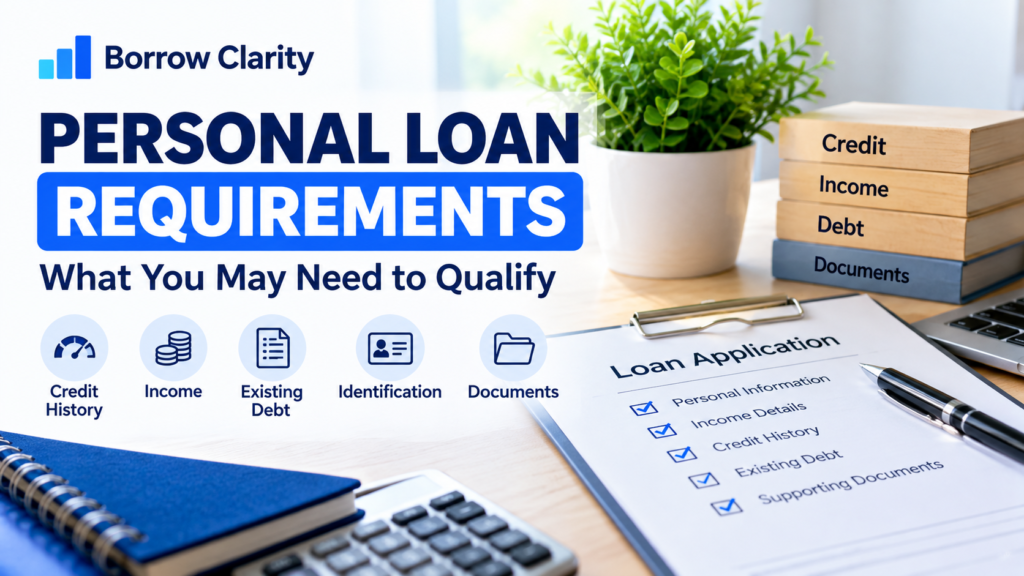
Personal loan requirements can vary by lender, but lenders commonly review information about your credit, income, existing debts, and the amount you want to borrow before deciding whether to offer credit and on what terms.
Understanding what lenders may review can help you prepare before applying. However, meeting common requirements does not guarantee approval. Each lender may use its own underwriting standards and eligibility criteria.
Quick Answer: Common personal loan requirements may include information about your identity, income, employment or income sources, credit history, existing debts, and requested loan amount. A lender may also request supporting documents to verify information in your application.
Personal Loan Requirements: What Do Lenders Consider?
According to the Consumer Financial Protection Bureau (CFPB), lenders considering a personal installment loan may look at factors such as your credit score and credit reports, income, debts, the amount and length of the loan, and other information such as bank account transactions.
These factors can affect not only whether credit is offered but also the interest rate and other loan terms that may be available.
There is no single set of requirements that applies to every personal loan. The lender, loan product, state law, requested amount, and your individual financial circumstances can all matter.
Lenders generally need information to identify the applicant.
Income information may be considered when evaluating repayment ability.
A lender may review your credit reports and credit score.
Current financial obligations may be part of the lender’s evaluation.
The amount requested and repayment period can affect available terms.
Supporting information may be requested to verify an application.
1. Identity and Personal Information
A lender generally needs enough information to identify you and process your credit application.
Depending on the lender and application process, you may be asked for information such as your name, date of birth, address, contact information, and other identifying details.
The exact documents or information requested can vary. Follow the lender’s instructions and provide sensitive information only through a legitimate, secure application process.
2. Income and Ability to Repay
Income can be an important part of a lender’s evaluation because the lender may consider whether your financial situation supports the repayment obligation.
The CFPB notes that income is among the factors many lenders may consider when determining personal installment loan rates and terms.
A lender may ask you to provide information about your income and may request documentation or other verification depending on its underwriting process.
Important: There is no universal income requirement for every personal loan. Minimum income rules and verification methods can vary by lender and loan product.
3. Credit History and Credit Score
Your credit reports and credit score may be considered when a lender evaluates a personal loan application.
Credit reports can contain information about your credit accounts, payment history, outstanding obligations, and credit inquiries. Lenders may use this information as part of evaluating creditworthiness.
A stronger credit profile may affect the terms available to a borrower, but there is no single credit score that guarantees approval for every personal loan.
Before Applying: Reviewing your own credit report does not hurt your credit score. Checking your reports can also give you an opportunity to look for inaccurate or outdated information before applying for credit.
Will Applying for a Personal Loan Affect Your Credit?
It can.
The CFPB explains that lenders usually run a credit check when you apply for new credit. This type of check is commonly called a hard inquiry or hard pull and can affect your credit score.
A soft inquiry is different. Examples can include checking your own credit report or certain prescreening activities. Soft inquiries do not affect your credit score.
Because lender practices can differ, review the lender’s disclosures to understand what type of credit inquiry may occur before providing authorization.
4. Existing Debts and Financial Obligations
Existing debt is another factor that lenders may consider.
Your current obligations can help a lender evaluate how an additional loan payment may fit alongside the debts you already have.
This is one reason it is useful to review your own budget before borrowing. Approval for a loan does not necessarily mean that taking the maximum available amount is appropriate for your financial situation.
5. Loan Amount and Repayment Term
The amount you request and the length of the loan can also affect the terms available to you.
Personal installment loans are generally repaid in scheduled installments over a defined period. Changing the amount borrowed or repayment period can change the required payment and overall borrowing cost.
Learn more in our guide: Personal Loan Repayment Terms Explained .
6. Documents You May Need for a Personal Loan
Documentation requirements vary by lender. Depending on the application, a lender may ask for information or documents that help verify your identity, income, address, or other application details.
Examples of information that may be requested can include:
Information or documents used to confirm your identity.
Information that supports income stated on the application.
Information used to verify your current residence when required.
Additional financial information requested as part of underwriting.
These are general examples, not a universal document checklist. Always follow the specific lender’s application requirements.
Do You Need a Specific Credit Score to Qualify?
There is no universal minimum credit score that applies to every personal loan.
Different lenders can use different underwriting criteria, and credit history is only one of several factors that may be considered. Income, debts, requested loan amount, repayment period, and other information can also affect a lending decision or the terms offered.
Be cautious of websites that imply a particular credit score guarantees approval unless that claim accurately reflects a specific lender’s published criteria.
Can You Qualify With Limited or Poor Credit?
Loan availability varies by lender. Some lenders may offer products to consumers with different credit profiles, but rates, fees, loan amounts, and other terms can differ substantially.
Having limited or poor credit does not mean that every lender will deny an application, but it also does not mean approval is guaranteed.
If an offer is available, review the complete borrowing cost carefully before deciding whether the loan fits your budget.
Personal Loan Requirements vs. Loan Terms
It is useful to distinguish between qualifying for a loan and deciding whether the loan terms are appropriate for you.
| Qualification Factors | Loan Terms to Compare |
|---|---|
| Credit history | APR |
| Income | Interest rate |
| Existing debts | Fees |
| Requested amount | Monthly payment |
| Application information | Repayment period |
| Lender-specific criteria | Overall borrowing cost |
Meeting eligibility requirements is only the first part of the process. If you receive an offer, compare its costs and terms before accepting it.
Our guide How to Compare Personal Loan Offers explains what to review when comparing offers.
How to Prepare Before Applying for a Personal Loan
Next step: Once you understand the requirements and are ready to explore your options, compare APRs, fees, repayment terms, monthly payments, and total borrowing costs before choosing an offer. See our Personal Loan Offers Comparison Guide.
Watch Out for Guaranteed-Approval Claims
Be cautious if someone claims that loan approval is guaranteed regardless of your credit history, particularly if they demand money upfront before providing the promised loan.
The Federal Trade Commission warns that advance-fee loan scammers may promise access to credit regardless of credit history and then demand a processing, insurance, application, or other fee before providing the supposed loan.
Red Flag: A promise that paying an upfront fee guarantees that you will receive a loan is a warning sign of an advance-fee loan scam.
This is also why Borrow Clarity does not use claims such as “Guaranteed Approval” when discussing personal loan options.
Your Rights When Applying for Credit
Federal law prohibits lenders from discriminating against applicants on certain protected grounds when they apply for credit.
The CFPB explains that lenders cannot discriminate based on factors such as race, color, religion, national origin, sex, marital status, age, or receiving income from public assistance, subject to the applicable legal requirements.
Lenders may, within legal limits, consider factors such as income, debt, and credit history when evaluating an application.
Frequently Asked Questions
What are the basic requirements for a personal loan?
Requirements vary by lender. Commonly reviewed information may include identity, income, credit history, existing debts, requested loan amount, and other information required by the lender’s underwriting process.
Do I need good credit to get a personal loan?
There is no single credit standard for every personal loan. Different lenders may serve different credit profiles and use different underwriting criteria. The terms available can also vary based on your circumstances.
Does applying for a personal loan hurt my credit score?
A lender will commonly obtain a credit report when you apply for new credit. A hard inquiry can affect your credit score. Soft inquiries, such as checking your own credit report, do not affect your credit score.
What documents do I need for a personal loan?
Document requirements depend on the lender. You may be asked for information or documentation related to identity, income, address, and other details needed to evaluate or verify the application.
Does meeting the requirements guarantee approval?
No. Meeting common requirements does not guarantee approval. Lending decisions depend on the lender’s underwriting criteria and the information evaluated in your application.
Should I compare offers if I qualify for more than one loan?
Comparing available offers can help you review differences in APR, fees, repayment terms, monthly payments, and overall borrowing costs before deciding whether to accept an offer.
Bottom Line
Personal loan requirements vary, but lenders may consider your credit history, income, existing debts, requested loan amount, repayment period, and other application information.
Preparing your information before applying can make it easier to understand the application process, but qualification should not be your only consideration.
If you receive a loan offer, review the APR, fees, monthly payment, repayment period, and overall borrowing cost before accepting it.
Continue Learning About Personal Loans
Start with our Personal Loans Guide .
Learn how to evaluate borrowing options in How to Choose the Right Personal Loan .
Understand borrowing costs in Personal Loan APR Explained and Personal Loan Fees Explained .
If you are reviewing potential options, see How to Compare Personal Loan Offers .
Sources
- Consumer Financial Protection Bureau (CFPB) — What is a personal installment loan?
- Consumer Financial Protection Bureau (CFPB) — When will my lender obtain a copy of my credit report?
- Consumer Financial Protection Bureau (CFPB) — What is a credit inquiry?
- Consumer Financial Protection Bureau (CFPB) — Credit discrimination is illegal
- Federal Trade Commission (FTC) — What to Know About Advance-Fee Loans
Disclaimer: This article is for educational and informational purposes only and should not be considered financial, legal, tax, or lending advice. Borrow Clarity is not a lender and does not make credit decisions. Eligibility requirements, approval standards, APRs, fees, loan amounts, and repayment terms vary by lender and borrower. Meeting common requirements does not guarantee loan approval. Always review the lender’s disclosures and consider your individual financial situation before borrowing.